
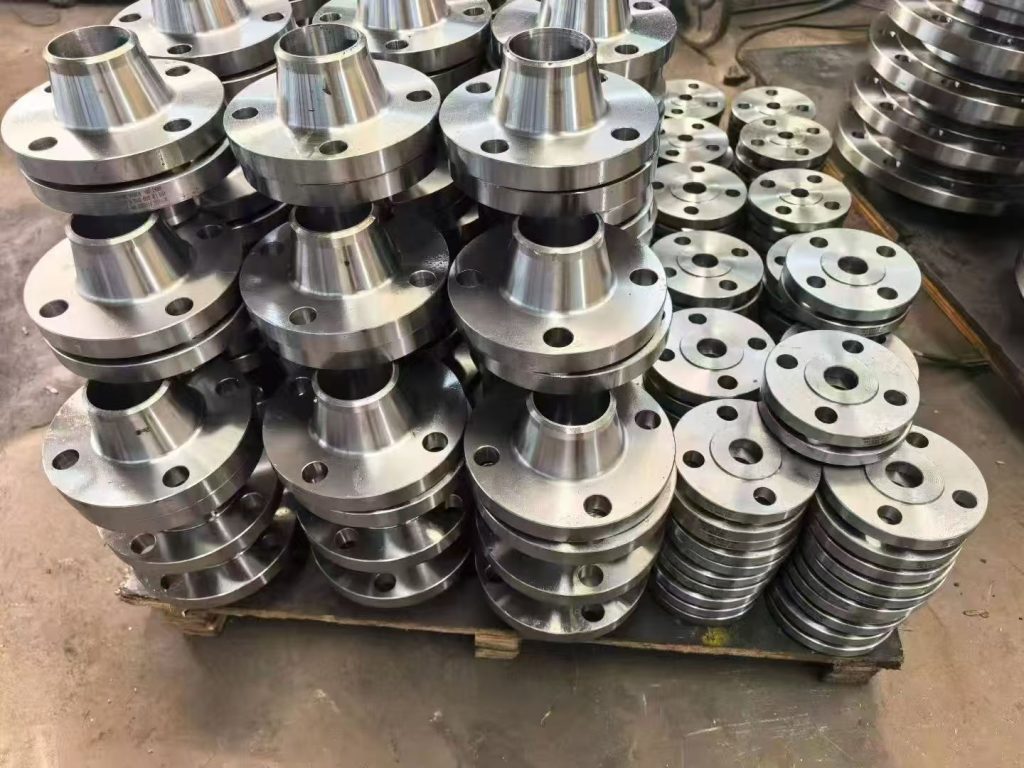
RF vs RTJ Flange
When designing and selecting flanges for high-pressure pipelines, particularly in oil & gas applications, understanding the differences between Raised Face (RF) and Ring Type Joint (RTJ) flanges is crucial. Each flange type is specifically engineered for unique sealing needs, ensuring reliability and safety in demanding environments.
Introduction to RF and RTJ Flanges
Flanges are essential components in pipeline systems, used to connect pipes, valves, and other equipment. Their primary role is to provide a reliable seal, preventing leaks under varying pressure and temperature conditions. Among the most commonly used types are Raised Face (RF) flanges and Ring Type Joint (RTJ) flanges. Both are designed to withstand high pressures but have distinct characteristics that make them suitable for different applications.
Raised Face (RF) Flange
Raised Face (RF) flanges are the most commonly used flange type in lower-pressure systems and non-critical applications. They have a raised portion around the center of the flange, which creates a contact surface for the gasket. This raised area allows for better sealing under lower pressure conditions, ensuring a tight connection between the flange and gasket.
Applications: RF flanges are typically used in low to medium-pressure systems, such as water, oil, and gas pipelines.
Material Compatibility: RF flanges are available in a variety of materials, including carbon steel, stainless steel, and alloy steels, providing flexibility for various pipeline materials.
Cost: RF flanges are generally less expensive than RTJ flanges, making them a cost-effective solution for many industries.
Ring Type Joint (RTJ) Flange
Ring Type Joint (RTJ) flanges are designed for high-pressure, high-temperature environments. The RTJ flange features a groove into which a metal ring is placed, ensuring a more robust seal under extreme pressure conditions. The metal ring is usually made of soft material that compresses to form a reliable seal, even in the most demanding conditions.
Applications: RTJ flanges are commonly used in oil & gas, petrochemical, and chemical industries, where high pressure and temperature are prevalent.
Material Compatibility: RTJ flanges are typically made from high-strength alloys such as carbon steel, stainless steel, or alloy steel to handle extreme conditions.
Cost: RTJ flanges are more expensive than RF flanges due to their robust design and higher material costs, but they are necessary for high-pressure applications.
RF vs RTJ: Key Differences and Selection Criteria
Sealing Mechanism:
1.RF flanges rely on the raised surface to compress a gasket and create a seal.
2.RTJ flanges use a metal ring to seal, ensuring a more secure connection in high-pressure systems.
Pressure and Temperature Handling:
1.RF flanges are best for low to medium-pressure applications.
2.RTJ flanges are designed to withstand high pressures and temperatures, making them ideal for extreme conditions in oil & gas pipelines.
Material Requirements:
1.RF flanges can be made from a wide range of materials, depending on the application.
2.RTJ flanges require high-strength, corrosion-resistant materials to perform optimally in critical applications.
Cost-Effectiveness:
1.RF flanges are more cost-effective and suited for non-critical applications.
2.RTJ flanges are pricier but essential for applications where safety and sealing performance under high pressure are crucial.
Choosing the Right Flange for Your Application
When selecting between RF and RTJ flanges, consider the pressure, temperature, and the materials in your pipeline. If you’re working in a high-pressure oil & gas environment, RTJ flanges are the best choice due to their superior sealing capabilities. For lower pressure applications, RF flanges provide a reliable and cost-effective solution.
At Shaanxi Gold-Stone , we specialize in providing high-quality flanges for a range of industrial applications, including the oil & gas industry. Whether you need RF flanges for general-purpose use or RTJ flanges for high-pressure systems, our comprehensive selection ensures we have the right product for your needs.
Contact us today sales@gs-pipeline.com for expert advice and premium flange solutions tailored to your industry requirements.