
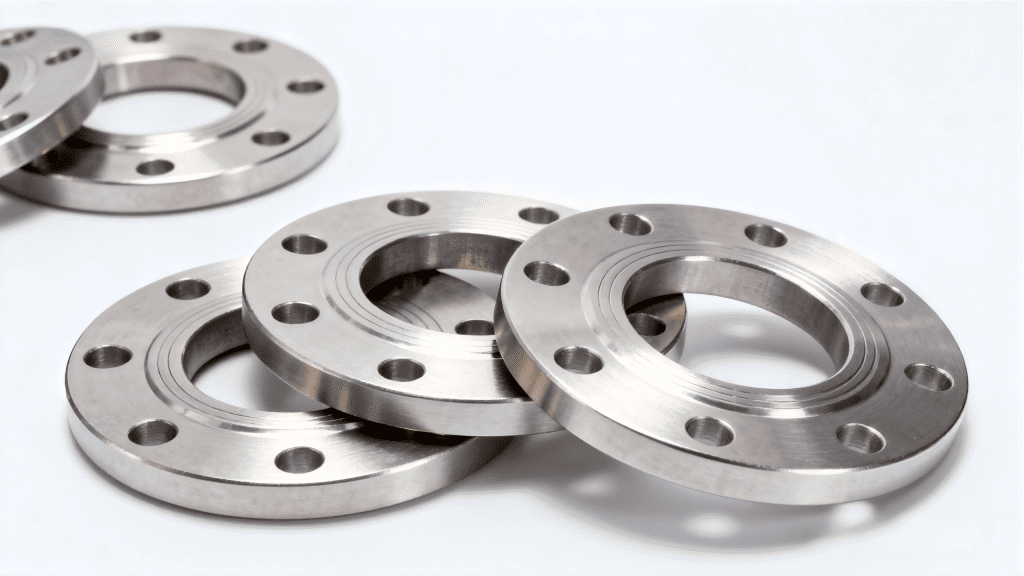
In industrial piping systems, the choice of flange type plays a critical role in ensuring safety, reliability, and operational efficiency. Understanding pipeline flange types helps engineers, contractors, and procurement specialists select the right solution for their projects. As a trusted flange supplier, we provide high-quality ASME B16.5 flanges that meet international standards and suit a variety of industrial applications.
Weld Neck (WN) Flanges
Weld Neck flanges are designed for high-pressure and high-temperature pipelines. Their long tapered hub allows for smooth stress transfer between the flange and the pipe, reducing fatigue and ensuring a reliable connection.
Key Features & Applications:
- Suitable for pressure classes from 150 to 2500 PSI
- Commonly used in oil & gas pipelines, petrochemical plants, and power generation
- Ideal for systems where welding is required and leak prevention is critical
Material Selection:
WN flanges are available in carbon steel, stainless steel, alloy steel, and duplex steel, providing corrosion resistance in aggressive environments.
Slip-On (SO) Flanges
Slip-On flanges are easier to install because the pipe slides into the flange and is welded both inside and outside. While they are more cost-effective than WN flanges, they are generally suitable for low to medium-pressure applications.
Key Features & Applications:
- Pressure rating: up to 600 PSI for standard applications
- Common in water treatment plants, HVAC systems, and low-pressure chemical pipelines
- Quick installation reduces labor costs and downtime
Material Selection:
SO flanges are widely available in carbon steel and stainless steel, with optional coatings for enhanced corrosion resistance.
Ring-Type Joint (RTJ) Flanges
RTJ flanges are designed for extreme conditions, offering an exceptionally tight metal-to-metal seal. A metal ring gasket fits into a precision-machined groove, providing zero leakage even under high pressure and corrosive environments.
Key Features & Applications:
- Pressure classes: up to 2500 PSI
- Common in offshore oil and gas pipelines, refineries, and chemical plants
- Suitable for sour gas and corrosive chemical services
Material Selection:
RTJ flanges are available in high-strength alloy steels, stainless steels, and duplex steels, designed to withstand harsh temperatures and pressures.
Blind Flanges
Blind flanges are used to close the ends of piping systems or vessel openings. They allow for inspection, maintenance, and future expansion without disturbing the main piping system.
Key Features & Applications:
- Available for all pressure classes according to ASME B16.5
- Essential in chemical processing, water treatment, and petroleum pipelines
- Provides quick access for inspection and system modifications
Material Selection:
Blind flanges are typically produced in carbon steel, stainless steel, and alloy steel to handle high pressure, corrosion, and temperature variations.
Selecting the Right Flange
Choosing the correct pipeline flange type requires consideration of several factors:
- Pressure rating and class: Ensures the flange can handle operational pressure without failure
- Material compatibility: Prevents corrosion and ensures chemical resistance
- Temperature rating: Suitable for high- or low-temperature processes
- Installation method: Determines whether welding or bolting is more practical
Using certified ASME B16.5 flanges ensures compliance with international standards, reducing operational risks and providing peace of mind in critical systems.
Industry Applications
- Oil & Gas: WN and RTJ flanges dominate pipelines transporting crude oil, natural gas, and refined products. Their robust design ensures leak-proof operation in high-pressure and high-temperature environments.
- Chemical & Petrochemical: RTJ and Blind flanges are used to handle corrosive chemicals safely, ensuring plant integrity and worker safety.
- Water Treatment & Power Plants: SO and Blind flanges are preferred for moderate-pressure systems, allowing easy installation, maintenance, and inspection.
- Offshore & Marine: Corrosion-resistant alloys combined with RTJ flanges ensure long-term durability in harsh offshore conditions.
Why Choose Us as Your Flange Supplier
As a professional flange supplier, we provide a full range of ASME B16.5 flanges, including WN, SO, RTJ, and Blind types. Our flanges are manufactured under strict quality controls and are available in various materials and pressure ratings to suit any industrial application.
By choosing [Shaanxi Gold-Stone I/E Co.,Ltd.]:
- You gain access to durable, certified flanges
- Reduce downtime with reliable, leak-proof connections
- Ensure compliance with international standards
- Receive expert guidance on selecting the right pipeline flange types for your system
Conclusion
Understanding pipeline flange types is essential for engineers and procurement specialists aiming for safe and efficient piping systems. From WN and SO to RTJ and Blind flanges, each type has unique advantages and ideal applications. Using certified ASME B16.5 flanges from a trusted flange supplier ensures system integrity, operational safety, and long-term reliability across oil & gas, chemical, water treatment, and power generation industries.