
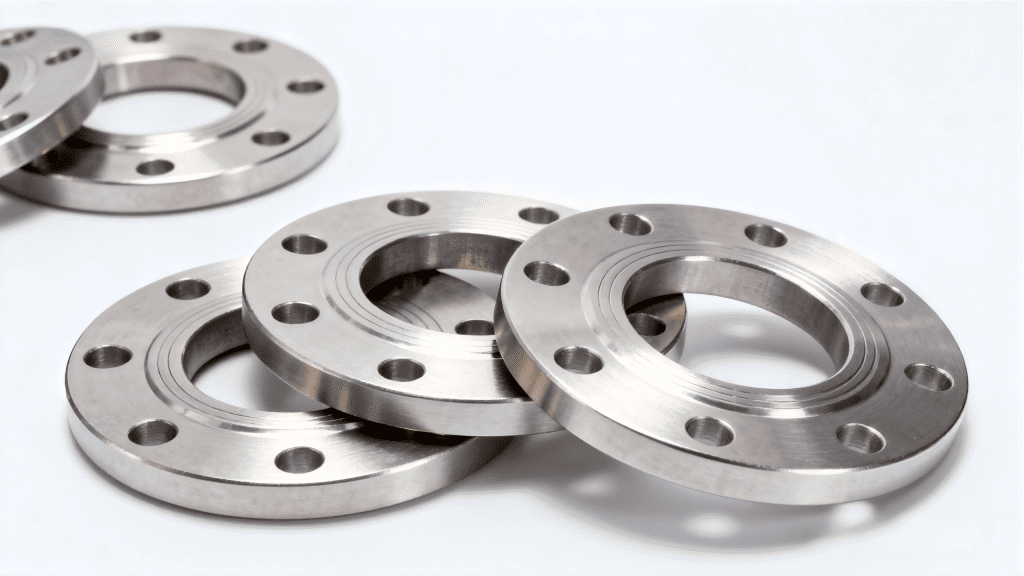
Forged Flanges vs Plate Flanges: Strength, Applications, and Industrial Insights
Choosing the right industrial pipeline flanges is crucial for safe, reliable, and long-lasting piping systems. Both forged flanges and plate flanges are widely used, but their strength, manufacturing methods, and applications differ significantly. This guide helps engineers, project managers, and procurement specialists select the optimal flange for pipelines in the United States, Europe, and Asia.
What Are Forged Flanges?
Forged flanges are produced by shaping heated metal under high pressure, which aligns the internal grain structure and removes internal voids. This results in high-strength flanges suitable for critical industrial pipelines.
Advantages:
- Superior pressure tolerance and mechanical strength
- Excellent fatigue and impact resistance
- Ideal for extreme conditions in oil & gas, chemical, and power generation pipelines
- Available in carbon steel, alloy steel, stainless steel, and specialty alloys
Applications:
- High-pressure oil & gas pipelines (onshore and offshore)
- Petrochemical plants and chemical transport lines
- Power generation systems, including steam and cooling lines
- Hydraulic and high-pressure water systems
What Are Plate Flanges?
Plate flanges, also called flat flanges, are cut and machined from steel plates. They are cost-effective but generally less robust than forged flanges.
Advantages:
- Suitable for medium to low-pressure pipelines
- Faster and cheaper to produce
- Flexible in size, thickness, and face type
Applications:
- Water treatment plants and HVAC systems
- Low-pressure chemical lines
- General industrial pipelines where high pressure is not required
Limitations:
- Lower fatigue and impact resistance
- Less suitable for high-pressure or high-temperature operations
Forged Flanges vs Plate Flanges: Technical Comparison
| Feature | Forged Flanges | Plate Flanges |
| Manufacturing Method | Forging under high pressure | Cut & machined from steel plates |
| Strength | High | Medium |
| Pressure Rating | High | Medium/Low |
| Fatigue & Impact Resistance | Excellent | Moderate |
| Ideal Applications | Oil & gas, chemical plants, power generation | Water treatment, HVAC, low-pressure pipelines |
| Cost | Higher | Lower |
Insight: Forged flanges are preferred for high-pressure pipelines, while plate flanges are ideal for cost-effective medium/low-pressure systems.
Material Considerations for Industrial Pipeline Flanges
Flange material affects performance and durability:
- Carbon Steel: Cost-effective for general water, oil, and gas pipelines
- Alloy Steel: High strength and temperature tolerance
- Stainless Steel: Excellent corrosion resistance for chemical and offshore pipelines
- Specialty Alloys: Nickel, duplex, and superalloys for extreme environments
Pairing the right flange type with the right material ensures compliance with ASME, ANSI, DIN, and API standards.
Regional Applications and Strategy
- United States: High demand for forged flanges in oil & gas and petrochemical industries; plate flanges used in municipal water systems and HVAC.
Europe: Emphasis on safety and compliance; forged flanges dominate offshore pipelines, plate flanges in general manufacturing.
Asia: Infrastructure growth drives demand for both types; forged flanges for high-pressure energy projects, plate flanges for water and low-pressure industrial systems.
Choosing the Right Flange
Factors to consider:
- Pressure Requirements: High-pressure systems need forged flanges.
- Material Compatibility: Consider corrosion, temperature, and chemical exposure.
- Budget: Plate flanges reduce costs in non-critical applications.
- Compliance: Ensure all flanges meet local and international standards.
Selecting the correct flange ensures pipeline safety, efficiency, and long-term cost savings.
Conclusion
Both forged flanges and plate flanges serve important roles in industrial pipelines. Forged flanges provide unmatched strength and reliability in high-pressure applications, while plate flanges are cost-effective for medium and low-pressure systems.
For industrial pipelines in the United States, Europe, and Asia, choosing the right flange type, material, and supplier ensures maximum performance, safety, and compliance.
Call-to-Action:
- Browse our full range of forged flanges
- Learn more about plate flanges for industrial pipelines
- Contact Us sales@gs-pipeline.com