
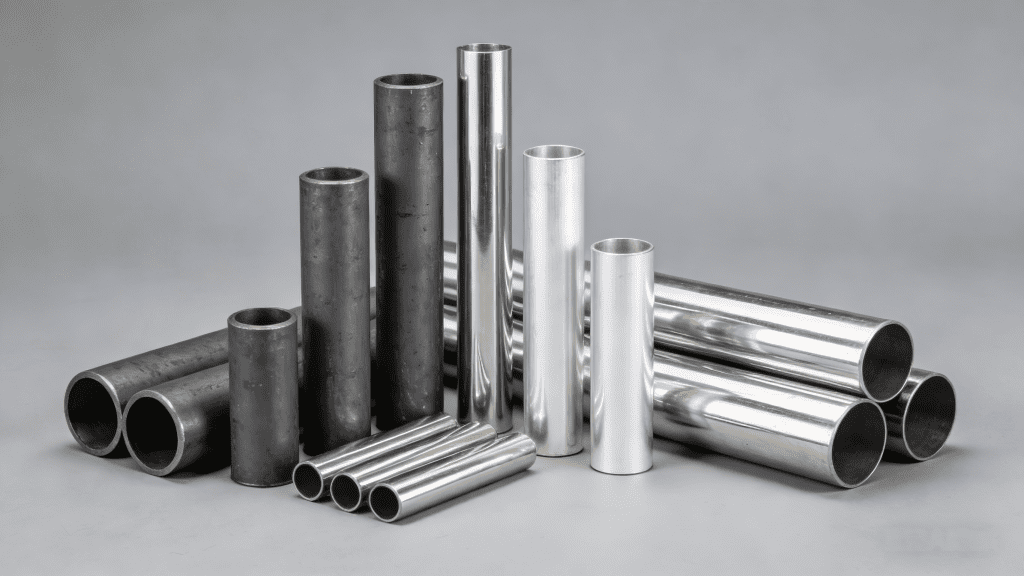
Seamless vs Welded Pipe – Differences, Advantages, and Industrial Applications
Introduction
Choosing between seamless pipe and welded pipe is a critical decision for industrial pipeline systems. These two types of steel pipes differ in manufacturing process, strength, pressure resistance, cost, and application fields.
Industries such as oil & gas, petrochemical, power plant, and water treatment must select the correct pipe type to ensure safety, durability, and performance.
At GS Pipeline, we supply both seamless steel pipe and welded steel pipe for various industrial pipeline applications worldwide.
This guide explains the key differences between seamless vs welded pipe to help engineers and buyers choose the right solution.
What is Seamless Pipe?
Seamless pipe is manufactured by piercing a solid steel billet and rolling it into a hollow tube without any welding seam. Because there is no longitudinal weld, the pipe structure is uniform and strong.
Seamless Pipe Features
- No welding seam
- Uniform structure
- High pressure resistance
- Better mechanical strength
- Excellent reliability
- Suitable for harsh environments
Seamless Pipe Manufacturing Process
- Steel billet heating
- Piercing process
- Hot rolling or cold drawing
- Sizing and straightening
- Heat treatment
- Inspection and testing
GS Pipeline supplies seamless steel pipes manufactured according to:
- ASTM A106
- ASTM A53
- API 5L
- ASTM A312
- EN standards
What is Welded Pipe?
Welded pipe is produced by rolling steel plate or strip into a cylindrical shape and welding the seam. The weld can be longitudinal or spiral depending on the manufacturing method.
Welded Pipe Features
- Visible welding seam
- Lower production cost
- Large diameter availability
- High dimensional accuracy
- Faster production time
Welded Pipe Manufacturing Types
ERW Pipe (Electric Resistance Welded)
- Smooth weld seam
- Used for medium pressure pipelines
- Common in water and gas transport
LSAW Pipe (Longitudinal Submerged Arc Welded)
- Large diameter capability
- High strength
- Oil and gas pipeline systems
SSAW Pipe (Spiral Welded Pipe)
- Very large diameters
- Lower cost
- Water and structural applications
GS Pipeline supplies all welded pipe types for industrial pipeline systems.
Seamless vs Welded Pipe: Key Differences
1. Manufacturing Process
Seamless pipe
- Made from solid billet
- No weld seam
- More uniform structure
Welded pipe
- Made from steel plate or coil
- Welded longitudinal seam
- Economical production
2. Strength Comparison
Seamless pipe generally offers higher strength because it has no weld seam. This makes it suitable for:
- High pressure pipelines
- Oil and gas transmission
- Boiler systems
- Power plants
Welded pipe strength depends on weld quality. Modern welding technology makes welded pipes reliable for many applications.
3. Pressure Resistance
Seamless pipe is preferred for:
- High pressure service
- High temperature environments
- Critical applications
Welded pipe is suitable for:
- Low to medium pressure systems
- Water pipelines
- Structural pipelines
4. Size Range
Seamless pipe
- Smaller diameter range
- Typically up to 24 inch
Welded pipe
- Large diameter available
- Up to 120 inch or larger
- Ideal for transmission pipelines
5. Cost Comparison
Welded pipe is more cost-effective because:
- Faster production
- Less material waste
- Easier manufacturing
Seamless pipe is more expensive due to:
- Complex production
- Longer manufacturing time
- Higher raw material cost
Seamless Pipe Applications
Seamless steel pipe is widely used in demanding industrial systems:
Oil and Gas Industry
- High pressure pipelines
- Drilling systems
- Offshore pipelines
- Refinery piping
Power Plant Systems
- Boiler tubes
- Steam pipelines
- High temperature piping
Petrochemical Industry
- Chemical transport
- Process piping
- High corrosion environments
Mechanical Engineering
- Hydraulic systems
- Pressure cylinders
- Machinery piping
GS Pipeline supplies seamless steel pipe for all above applications.
Welded Pipe Applications
Welded pipes are widely used where cost and large diameter are important.
Water Supply Pipeline Systems
- Municipal water pipelines
- Irrigation systems
- Drainage pipelines
Oil and Gas Transmission
- Long distance pipelines
- Low pressure systems
- Storage tank piping
Structural Applications
- Construction pipelines
- Steel structures
- Mechanical supports
Industrial Pipeline Systems
- Cooling water pipelines
- Low pressure fluid transport
- HVAC systems
Seamless vs Welded Pipe: Which Should You Choose?
Choose seamless pipe when:
- High pressure required
- High temperature service
- Critical safety application
- Oil and gas systems
- Boiler pipelines
Choose welded pipe when:
- Large diameter needed
- Budget sensitive project
- Low pressure system
- Water pipeline
- Structural application
GS Pipeline engineers can recommend the best solution based on your project requirements.
GS Pipeline Steel Pipe Supply Range
GS Pipeline provides complete industrial pipeline materials including:
Steel Pipe Products
- Seamless steel pipe
- ERW welded pipe
- LSAW steel pipe
- SSAW steel pipe
- Carbon steel pipe
- Stainless steel pipe
Standards
- API 5L
- ASTM A106
- ASTM A53
- ASTM A312
- EN10210
- EN10219
Applications
- Oil and gas pipeline systems
- Petrochemical plant pipelines
- Power plant piping
- Water supply pipeline systems
- LNG pipeline systems
Conclusion
Both seamless pipe and welded pipe play important roles in industrial pipeline systems. Seamless pipe provides superior strength and pressure resistance, while welded pipe offers cost efficiency and large diameter availability.
Understanding the difference between seamless vs welded pipe helps engineers select the best option for safety, performance, and budget.
GS Pipeline supplies high-quality seamless steel pipe and welded pipe for global industrial pipeline projects. Contact us for professional pipeline material solutions.