
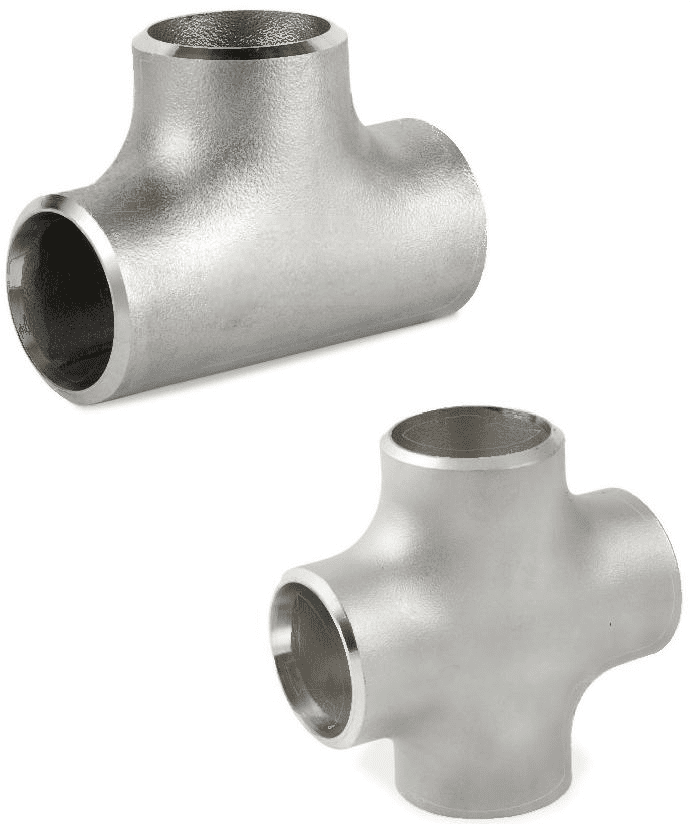
Pipe Tee vs Pipe Cross: Selection Guide for Pipelines
Introduction
In industrial pipeline systems, choosing the right fittings is crucial for safe, efficient, and reliable operation. Pipe tees and pipe crosses are two common types of branch fittings, each serving distinct purposes in pipeline networks. Understanding their features, applications, and limitations helps engineers and procurement teams optimize system design, reduce costs, and enhance performance.
What is a Pipe Tee?
A pipe tee is a T-shaped fitting that allows a pipeline to branch into two directions. Key characteristics include:
- One inlet and two outlets (or vice versa)
- Available in equal and reducing sizes
- Designed for diverting or combining flow
Applications of Pipe Tees:
- Industrial Process Piping: Common in oil, gas, and chemical plants for fluid diversion.
- High-Pressure Systems: Suitable for pipelines carrying high-pressure liquids or gases.
- Temperature and Corrosion Resistance: Available in stainless steel, carbon steel, and alloy materials for harsh environments.
What is a Pipe Cross?
A pipe cross is a four-way fitting that connects one inlet with three outlets (or vice versa), forming a cross shape. Its main features include:
- Four connection points at 90° angles
- Distributes fluid to multiple branches simultaneously
- Often used in larger pipeline networks
Applications of Pipe Crosses:
- Complex Branching Systems: Ideal for multiple outlets from a single main line.
- Large Industrial Facilities: Common in refineries, chemical plants, and water treatment systems.
- Space Optimization: Reduces the need for multiple tees and elbows in compact layouts.
Pipe Tee vs Pipe Cross: Key Selection Considerations
When selecting between a pipe tee and a pipe cross, consider the following factors:
- Number of Branches: Tees are suitable for a single branch; crosses for two or more branches.
- Flow Dynamics: Crosses can cause turbulence if misaligned; tees generally maintain smoother flow.
- Installation Complexity: Tees are easier to install; crosses require precise alignment and additional support.
- Cost Efficiency: Tees are typically more economical; crosses are costlier due to manufacturing complexity.
Material and Pressure Ratings
Both pipe tees and pipe crosses are available in a wide range of materials, including:
- Stainless Steel – corrosion and temperature resistant
- Carbon Steel – high strength for general industrial use
- Alloy Steel – specialized applications requiring chemical resistance
Selecting the right material and pressure rating ensures long-term pipeline safety and reliability, especially for high-pressure, high-temperature, and corrosive media.
Conclusion
Proper selection of pipeline fittings is essential for system efficiency and safety. Use a pipe tee for simple branch connections and flow diversion, and a pipe cross for multi-branch systems requiring more complex distribution. Careful material selection and installation practices ensure durability and operational reliability.
For high-quality industrial pipeline fittings including pipe tees and pipe crosses, Shaanxi Gold-Stone I/E CO.,Ltd. provides durable solutions for oil, gas, chemical, and process industries worldwide.